
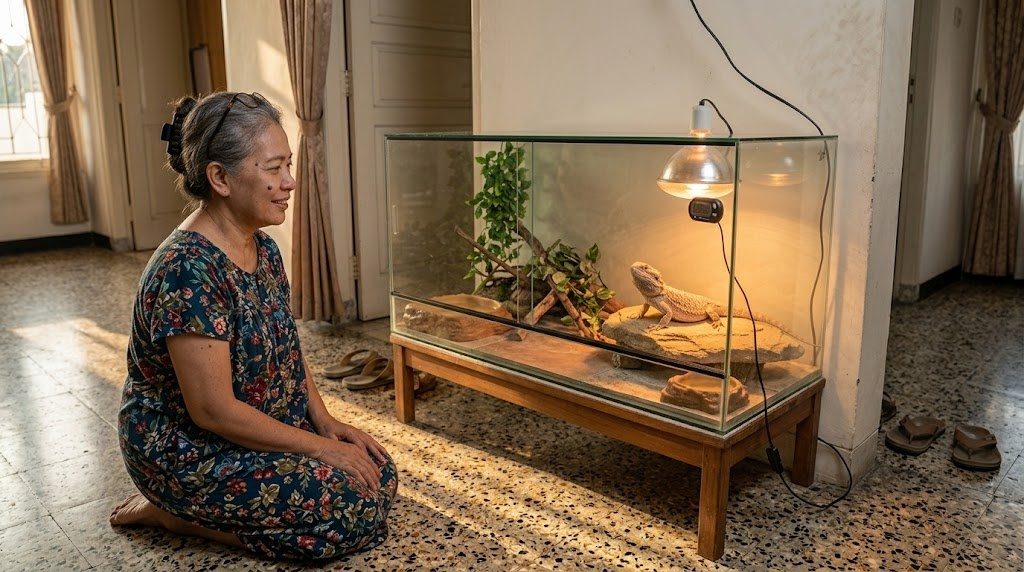
Reptile not eating, or looking dull? A vet comes to your home in Greater Jakarta
With reptiles the enclosure is examined too. That is where most of the cause usually sits.
If you know the enclosure temperatures and the type of lamp, mention them. That alone often explains a lot.
Why reptiles are not treated like cats and dogs
Reptiles do not regulate their own body temperature. The enclosure decides whether yours can digest food, fight infection, and use calcium. So a sick reptile almost always has two layers of cause: the illness itself, and the husbandry that allowed it.
Reptiles also hide illness far longer than mammals do. By the time one looks dull, it has usually been unwell for weeks.
What is behind most reptile cases
Four things come up again and again:
- Temperature. There must be both a warm end and a cool end, measured with a thermometer rather than judged by hand.
- UVB light. The output fades long before the bulb stops lighting up. A lamp that still glows is not proof of usable UVB.
- Humidity. Too dry and the skin fails to shed; too damp and skin and airway problems follow.
- Diet and calcium. The wrong diet takes months to show, then shows all at once.
This is why a home visit helps more for reptiles than for other pets. The vet sees the enclosure itself instead of hearing about it.
Signs that should not wait
Message us straight away if you see any of these:
- Foam at the mouth, swelling, or a white film on the gums
- Noisy breathing, mouth held open, or discharge at the nostrils
- Unable to lift the head, or the body goes limp
- A shell that softens, bleeds, or smells
- Shed skin that stays stuck around toes, tail, or eyes
- Anything protruding from the vent that does not go back in
- Burns on the belly or back, usually from a heat rock or a lamp placed too close
What we ask first
- Species and rough age
- Warm end and cool end temperatures, and how you measure them
- Type of lamp, and how long the UVB bulb has been in use
- Humidity, and how you maintain it
- Daily diet, and any calcium supplement
- Last meal, last droppings, last shed
- A photo of the whole enclosure taken from a distance, not only of the animal
For reptiles the enclosure photo often tells us more than the animal photo. Send both if you can.
What the vet does at your home
- Weighs the animal and assesses body condition
- Examines mouth, eyes, nostrils, and vent
- Checks skin, shell, and any retained shed
- Palpates the abdomen to assess the contents
- Measures enclosure temperatures at several points and checks how the lamps are positioned
- Takes samples if they are genuinely needed
When a fuller facility is needed
Some things cannot be done at home, and we say so before the visit rather than after:
- Radiographs, for example to assess retained eggs or bone density
- Surgery and anaesthesia
- Inpatient care with temperature held steady for hours
- Fluids by routes that require specific equipment
If the signs point that way, we tell you first so you do not pay twice.
FAQ
My reptile has not eaten for weeks. Is that normal?
Sometimes, yes: before a shed, in certain seasons, or in a snake after a large meal. But not eating together with dullness, weight loss, or a mouth problem is not something to wait out. Describe it first and let it be assessed.
Is my lamp good enough?
What matters is the type, the distance, and the age of the bulb, not how bright it looks. Give us all three in chat and it can be assessed before anyone sets off.
Which species do you see?
Tortoises and turtles, snakes, lizards including iguanas and bearded dragons, and geckos. If a case falls outside what we can do, we say so plainly at the start.
Why not bring the animal to a clinic?
Travel drops a reptile body temperature, and a lower temperature slows everything down, recovery included. At home the enclosure is examined as well.
What does it cost?
It follows the examination needed and the distance. Send the symptoms and your location on WhatsApp and we give you the figure before anyone sets off.
An emergency? Put EMERGENCY at the start of your message
Difficulty breathing, seizures, collapse, poisoning, or bleeding that will not stop needs attention straight away. We are open 24 hours: put EMERGENCY at the start of your WhatsApp message so our team responds first, day or night. For anything needing oxygen, transfusion, or hospitalisation, our vet will tell you plainly and help you get to a facility that has the equipment.
Send a photo of the enclosure too
For reptiles the enclosure often answers half the question already. Describe the symptoms and attach a photo of the whole setup.
Service summary
We are open 24 hours, including at night. Night visits count as emergency visits, and we share the details on WhatsApp before the vet sets off. For an emergency, put EMERGENCY at the start of your message.