Rabbit, hamster, sugar glider, or bird unwell? A vet comes to your home in Greater Jakarta
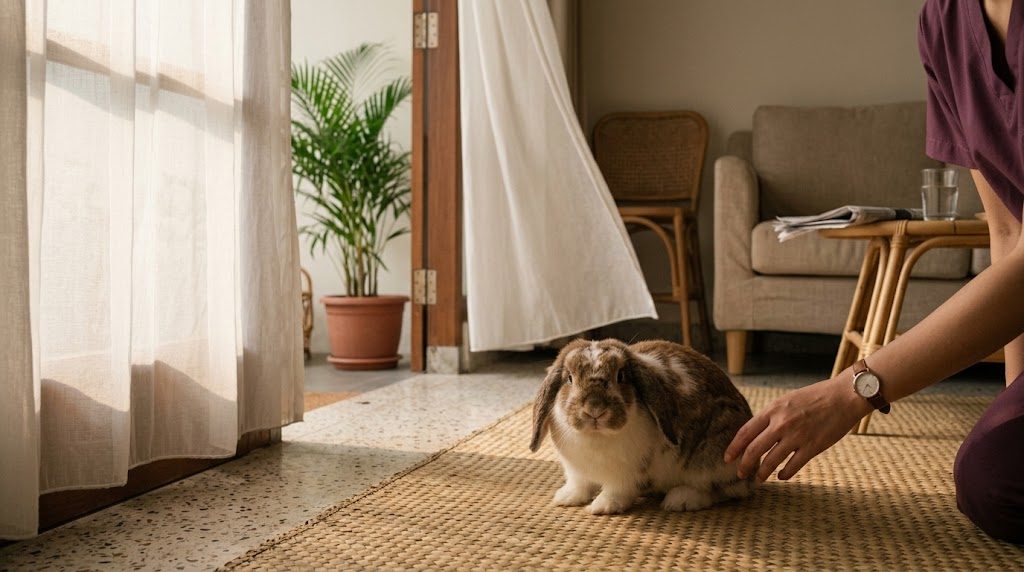
Small pets hide illness until late, and the journey to a clinic can make them worse. They are examined in their own cage instead.
Mention what they last ate and when they last passed droppings. For small pets that is often the first clue.
Why small pets are different
Rabbits and small pets are prey animals. Hiding pain is how they survive, so the signs appear late and then worsen quickly.
They also deteriorate from the stress of travel alone. Being examined in their own cage is safer, and it shows the vet the environment the illness came from.
What should not wait
A rabbit that stops eating and stops passing droppings must be assessed the same day. Its gut has to keep moving.
Message us straight away if you see:
- A bird breathing noisily, or its tail pumping with each breath
- A head held tilted and staying that way
- Unable to stand, or fitting
- An open wound, especially a bite
- Diarrhoea, since small pets hold very little fluid in reserve
- A hamster or guinea pig gone completely still and off food
What we ask first
- Species and age
- The daily diet, including the type of hay and pellets
- When it last ate and last passed droppings, and what they looked like
- The cage, its size, and where it sits in the house
- Any other animals in the home
- Anything that changed recently: a new cage, a move, the weather
A large share of these cases begin in the diet or the cage. Knowing this early shortens everything.
What the vet does at your home
- Weighs the animal on a scale meant for small pets
- Examines the teeth, which are often the root of the problem
- Listens to the gut
- Assesses hydration and body temperature
- Checks skin, coat, ears, and eyes
- Looks over the cage itself for the cause
When a clinic is needed
Some procedures need equipment and a prepared room, and cannot be done at home:
- Anaesthesia, which demands extra care in small pets
- Surgery
- Radiographs
- Inpatient monitoring over several hours
If the signs point that way, we tell you before the visit is scheduled, not after.
FAQ
My rabbit will not eat. Should I wait and see?
Do not wait overnight. A rabbit that has stopped eating and stopped passing droppings is urgent. Contact us the same day.
My small pet is just a bit quiet. Is that worth a visit?
Yes. Small pets are good at hiding illness. Quiet, especially with less eating, usually means something has been going on for a while.
Do you see hamsters and sugar gliders?
Yes. If a case falls outside what we can do, we say so plainly at the start.
Why not bring it to a clinic?
The journey alone can drop a small pet sharply. Examining it in its own cage is safer and tells us more.
What does it cost?
It follows the examination needed and the distance. Send the symptoms and your location on WhatsApp and we give you the figure before anyone sets off.
An emergency? Put EMERGENCY at the start of your message
Difficulty breathing, seizures, collapse, poisoning, or bleeding that will not stop needs attention straight away. We are open 24 hours: put EMERGENCY at the start of your WhatsApp message so our team responds first, day or night. For anything needing oxygen, transfusion, or hospitalisation, our vet will tell you plainly and help you get to a facility that has the equipment.
Asking early helps far more
Tell us about any change, however small. With small pets, waiting one night can change a great deal.
Service summary
We are open 24 hours, including at night. Night visits count as emergency visits, and we share the details on WhatsApp before the vet sets off. For an emergency, put EMERGENCY at the start of your message.